
Carbon Tax Dilemma in Indonesia, What is the Fate of the Indonesian Automotive Industry?
JAKARTA – The plan to impose a carbon tax is claimed to be Indonesia’s solution to reduce carbon dioxide (CO2) emissions. Energy Watch Executive Director, Mamit Setiawan, said the plan would not kill the automotive industry, which was being flushed with incentives by the government. Instead of turning it off, Mamit considered the carbon tax […]

Fadel Surur
Author

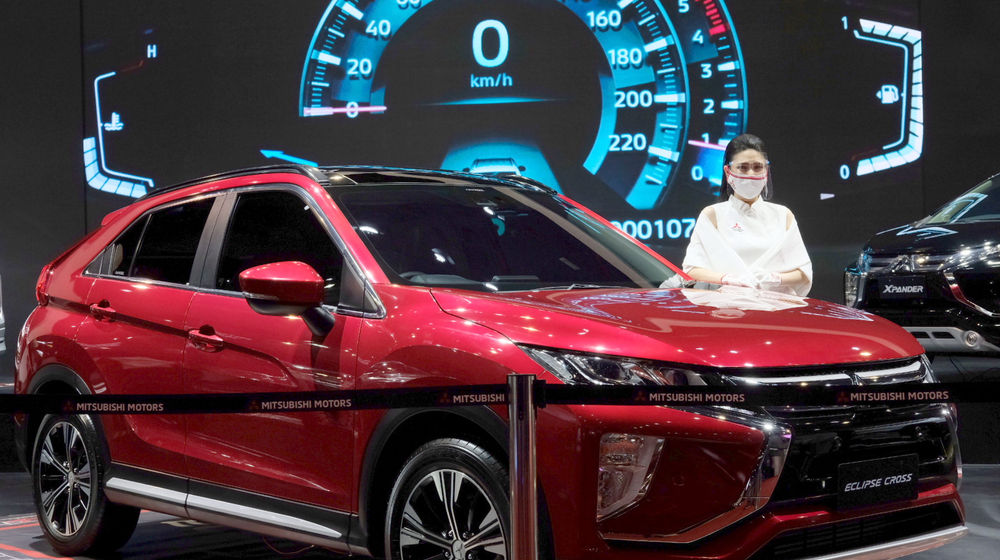
Model berpose di dekat mobil Mitsubishi yang dipamerkan pada ajang Indonesia International Motor Show (IIMS) Hybrid 2021, di JIEXpo Kemayoran, Jakarta, Jum’at, 16 April 2021. Foto: Ismail Pohan/TrenAsia
(Istimewa)JAKARTA – The plan to impose a carbon tax is claimed to be Indonesia’s solution to reduce carbon dioxide (CO2) emissions.
Energy Watch Executive Director, Mamit Setiawan, said the plan would not kill the automotive industry, which was being flushed with incentives by the government.
Instead of turning it off, Mamit considered the carbon tax to spur industry players to innovate to present environmentally friendly products.
“This has motivated the automotive industry to be more creative and serious in developing environmentally friendly engines or developing electric vehicles,” Mamit said when contacted by Trenasia.com, Monday, May 24, 2021.
- 11 Bank Biayai Proyek Tol Serang-Panimbang Rp6 Triliun
- PTPP Hingga Mei 2021 Raih Kontrak Baru Rp6,7 Triliun
- Rilis Rapid Fire, MNC Studios Milik Hary Tanoe Gandeng Pengembang Game Korea
- Anies Baswedan Tunggu Titah Jokowi untuk Tarik Rem Darurat hingga Lockdown
- IPO Akhir Juni 2021, Era Graharealty Dapat Kode Saham IPAC
To note, carbon tax is a form of pigouvian tax to compensate for negative externalities from activities that produce carbon emissions. A total of 16 countries have implemented this regulation.
Sweden applied the highest carbon tax with 108.8 Euros or Rp1.8 million per ton of carbon emissions. In the next position, there are Switzerland and Liechtenstein which set the most expensive carbon tax of 90.53 Euros per ton of carbon emissions.
Meanwhile, Japan, Singapore, France and Chile are known to have set carbon tax rates in the range of US$3 to US$49 per ton of carbon emissions.
Regarding the optimal amount of tax rates, Mamit said that the government should not put high rate first. This, said Mamit, was due to the economy condition of Indonesia that had not fully recovered in 2022.
“I think we don’t have to put expensive price at first, it needs to be adjusted to the income and economic level of the people,” said Mamit.
On the other hand, the use of fossil energy, in this case fuel oil (BBM), can increase the use of the Research Octane Number (RON). As is known, the higher the RON or octane value, the more positive impact it will have on the condition of the vehicle.
“This tax will also trigger consumers to use fuel with high RON or minimum EURO IV standards. I do not think the automotive industry will be disrupted because of this plan, “said Mamit.
The same thing was expressed by Automotive Observer, Martinus Pasaribu. Yannes said the carbon tax policy would not “harm” the domestic automotive industry. Furthermore, he assessed that the carbon tax could trigger electric cars to become increasingly popular in Indonesia.
“The trend of electric vehicles in Indonesia really depends on the consistency of state policies,” Yannes told Trenasia.com, Monday, May 24, 2021.
The automotive sector, said Yannes, greatly affects the condition of carbon emissions. The Climate Transparency Report 2020 states that the transportation sector accounts for 27% of the world’s total carbon emissions.
“All the ongoing series of policy processes need to be guarded so that they can become a more holistic policy portfolio and an increasingly conducive domestic market system to electric vehicle ecosystem,” said Yannes.
In addition, Indonesia is also being pursued by a target of 23% new and renewable energy mix (EBT) by 2025. On the revenue side, taxes are targeted to contribute up to Rp1,499.3 trillion-Rp1,528.7 trillion to Gross Domestic Product (GDP) in 2022.
- 11 Bank Biayai Proyek Tol Serang-Panimbang Rp6 Triliun
- PTPP Hingga Mei 2021 Raih Kontrak Baru Rp6,7 Triliun
- Rilis Rapid Fire, MNC Studios Milik Hary Tanoe Gandeng Pengembang Game Korea
- Anies Baswedan Tunggu Titah Jokowi untuk Tarik Rem Darurat hingga Lockdown
- IPO Akhir Juni 2021, Era Graharealty Dapat Kode Saham IPAC
Two Tax Imposition Options
The government through the Directorate General of Taxes (DGT) Ministry of Finance (Kemenkeu) has opened two carbon tax revenue options.
Referring to the 2022 Macroeconomic and Fiscal Policy Framework (KEM PPKF) report, the imposition of carbon taxes can be implemented through the existing tax component.
Carbon tax can be collected through the components of Income Tax (PPh), Value Added Tax (PPN), Value Added Tax on Luxury Goods (PPnBM), to Non-Tax State Revenue (PNBP).
In addition, carbon taxes that can be taken by the government are through motor vehicle tax (PKB) and Motor Vehicle Fuel Tax.
The second option that the government can take is by issuing a special article in the Constitution (UU) General Provisions and Tax Procedures (KUP) which specifically regulates the mechanism for regulating carbon taxes in Indonesia.
“Carbon tax is imposed on fossil fuels by looking at the potential emissions that can be generated by their use,” in the 2022 Macroeconomic and Fiscal Policy Framework (KEM PPKF) report published Monday, May 24, 2021.
Writer: Muhamad Arfan Septiawan